Monday, 6 February 2012

How To: Class making


With the 3rd party folder open and accepting on the Dropbox, it leaves room for imaginative people to create their own classes. The following is a handy how-to for those who want to take a crack at doing it themselves, the lessons and ideas here can be transferred to other tabletop games, in addition to Providence.


The Concept
            The idea that sprang about your mind, the really cool thing you saw at the cinema, or something you’ve wanted to be since childhood. The concept of your class needs to be clear enough so people can get an immediate feel of what it does. A Fighter, for example, fights. Be sure to avoid stepping on the toes of other classes. As such, do not copy powers or class features, and if they perform the same role as another class, demonstrate how it performs the role in a different manner.


The Role
            Each class must fulfil a specific role to define its play style, and is usually decided by the Concept. Still, be sure to allocate a specific purpose for the class. Don’t be afraid to play around with the roles, and feel free to think of a combination of roles that might not be present in existing classes. Fighters, for example, are Tanks that can be tooled to become Damage Dealers by using Dominate the Field to gain bonus attacks. Paladins are also Tanks, but can be made into righteous slayers or armoured priests.

            Tanks soak damage, and generally have high hit points and a method of increasing their defences. The penalty for this is usually damage dealing potential or their skills. Tanks require a power or class ability, nicknamed the Tanking Engine, which inflicts the Marked condition on enemies, and punishes those enemies for deviating from them. Be sure to consider the potential pros and cons of your engine; Fighters can easily Mark many enemies in their vicinity, but without appropriate feats, they can only react to a few of them, and cannot react at all at a distance. Paladins can Mark anything they can see, and potentially inflict large amounts of damage even at range, but they can only Mark one enemy,

            Damage Dealers, or DDs/DPS, inflict large amounts of damage to enemies. They tend to be very dedicated in their role, and often do not deviate from the path of attack and damage. Grant powers and class features that single out targets, or offer bonuses to attacks in specific conditions or provide crippling disadvantages.
The fallout of this tends to be a weakness that can be exploited by a savvy GM. Barbarians, for example, are designed to deal the most damage in Providence. Their weaknesses are a fairly low AC, and their Rage power prevents all kind of clever thinking. Although this is offset somewhat by a massive pool of Hit Points, a GM can lead a Barbarian player into a mid-combat trap, or trick him into charging allies.
Rogue is another example, although it straddles the Damage Dealer and Toolbox roles. Rogues have very limited damage potential, as they do not have access to a great number of large weapons. However, their Sneak Attack class feature does spectacular damage to compensate. There is a drawback, however, as Rogues can only inflict this damage against opponents who grant Combat Advantage, thus limiting their effectiveness.

Toolbox characters perform acts that other characters generally can’t. This often includes a large skill list and a large pool of skill points, as well as other powers that twist the natural workings of the game. Toolboxes are often combined with other roles to a greater or lesser extent, so be sure to include a method through which their utility powers effect the outcome of a battle. Many Toolboxes are more frail in combat than other classes, and have very few methods of making themselves tougher.
Rogues are a skill based Toolbox, potentially having the most skill points available to a single class. Combined with their Rogue Talents class feature, they can trick, convince or mislead enemies into odd positions, and capitalise on their weakness with their Sneak Attack feature.
Totemics have the power to transform into animals. Their unique forms are their greatest strength, for who better to infiltrate the castle than a rat, or to search for sunken treasure than a shark? Totemics are not frail in direct combat either, but can be at a loss if they do not possess an appropriate form for a task.

Support characters are used best with allies, and are generally very weak on their own. In exchange for other essential scores, Support characters grant impressive bonuses to their allies, and sometimes ail their enemies. Think of a system through which the class can grant bonuses, and consider putting a limit on the usage of such powers if they are powerful enough.
Bards are the king of Support classes. Although they are part-way Healer and Toolbox as well, their song can grant fantastic improvements to their allies’ fighting power, potentially making an impossible encounter conquerable. However, Bards are also frail, and must stay close to danger in order to grant their bonuses.
Faustians do not aid their allies at all, instead choosing to cripple their enemies with powerful curses and irresistible hexes, while their Familiar transforms into a mighty beast that can fill any potential role in the party. Still, Faustians have no real fighting power on their own, low health and low defences. Coupled with their sacrificial Manifestations, they are easily singled out and destroyed.

Healers have the power to aid failing allies, often restoring Hit Points, granting Temporary Hit Points and allowing Saving Throws. All Healing classes have a Healing power, nickname the Main Heal. Main Heal powers are all minor actions with a Range of 5, restore one Healing Surge, can be used at least once per encounter to a maximum of three times, and has an additional effect. Be sure to differentiate yours from the rest with different effects. Healing Word, for example, restores an additional 1d6 Hit Points that scale with level, whereas a Bard’s Majestic Word restores an additional number of Points equal to their CHR modifier.
The style of healing is also a factor for the creation of healing classes. Clerics and other Divine classes must be adjacent to allies in order to heal them, whereas Druids can heal with ranged Primal spells, but the healing is slow, and takes time.


The Power Source
            This is where your class gains its power from and is the source for much of its flavour. Try to adhere to the conventions of the Power Sources, as they are designed to be easily identifiable categories through which later class choices are made.

            Arcane classes are magical by nature. All of the classes in this source have access to the Arcane Spell List or accrues Magic Points. This list is long and very in depth, so be aware of the maximum spell level and the number of Magic Points you allow your class to have access to. Sometimes, although not always, Arcane classes can change the way their spells work, or put them into effect where other classes cannot. Arcane classes have no dedicated melee class at their disposal, and to the same degree, they have no ability to Tank.

            Divine classes worship Gods. They also tend to be very flexible, although Divine classes have trouble fighting at a distance. In addition, each Divine class has the Divine Aura class feature, through which you can choose to manipulate the class features. In addition, you can give your class access to the Domains list as a means of customisation. Alignment is important, and based on the deity players worship, so feel free to play around with alignment based bonuses.

            Martial classes are based on physical prowess over supernatural power. There is nothing mystic about the Martial classes, as they have no power that is conceivably impossible to mortal man. Keep this in mind as you think of your character’s abilities. If inspiration evades you, look to the modern world of guidance, as truth is often weirder than fiction. Consider item based powers, such as granting attack rerolls or the ability to wield mundane items as lethal weapons.

            Primal classes revolve around the natural world. Think like a hippie; try to stay away from man-made weapons and armour, and design creative ways of circumnavigating these problems. Primal classes tend to be very extreme in their inherent build, so try to stick to a maximum of two Roles when creating your character, if not one.

            Psionic classes use the mind to wield the soul as a weapon. They follow the theme of spending resources, so it is recommended that you have a resource-based ability list to draw on. Although Power Points is the resource engine of Psion, feel free to use it if your Psionic class uses Psionic spells, as Power Points are specifically used to empower such spells.

            Shadow classes are more sinister than other classes. Theirs is the theme of the pact. Of the existing classes, this takes the form of a physical reminder, with Faustian epitomizing this source with their Familiar. Do not feel constricted by this idea, the pact can take one of many forms. Shadow classes also tend to be very flexible, and have unique powers. Healers do not fit into the realms of the Shadow class.


The Alignment
            Set which of the nine alignments your class must adhere to. Personally, I dislike the concept of alignment restriction, and as a result all of my classes can be any alignment. Still, be sure to note that certain classes tend to swing in one direction more than another. It is conceivable for a Barbarian to attempt to be a law-abiding citizen in a large town, or a Paladin to belong to a Chaotic Evil God.


Key Abilities
            Set the key ability scores for your class. Make them MAD! By that, I mean Multiple Attribute Dependant (or Disorder, as I like to think). Make sure your class has four or more attributes to revolve around. Make sure class features and powers fit with the right attribute. The reason for this is to make a player think about their class choices. If there were only two ability scores that effected the class, then all of the characters would handle the same. By expanding your classes’ horizons, you have the chance for players to create the same class, twice, in a completely different manner.
            Paladins are the perfect example of MAD; a Paladin needs STR to land hits, but might need DEX to increase their AC. If they want to Tank, they will need a semi-decent CON score, but at the same time they need a high WIS score to fuel their Divine spells. On top of all that, many of their offensive powers run on CHR. In fact, the only ability score that isn’t used at all is INT. Then again, if the Paladin wants to be of more use to the party or perform more unorthodox combat manoeuvres, they just might need that INT score.
            Here, there are multiple uses for Paladin, all of which are perfectly viable, but run off differing combinations of scores, such as the shield warrior (STR + CON), the frontline healer (STR + WIS), the righteous slayer (STR + CHR), the armoured priest (WIS + CHR), the nimble powerhouse (STR + DEX) and so on.

            Strength (STR) is the basis of all melee attacks. The easiest way to include it is through melee classes, although it is possible to create a lethal ranged class that gains a STR bonus to spells and or powers. When writing powers, emphasise damage, size and killing things in general.

            Dexterity (DEX) governs a lot of things, and is arguably used more than any other ability score. Make this a priority if your class makes extensive use of ranged weaponry, light armour or is designed to dual-wield. It also governs a great deal of skills. Be in mind that the Weapon Finesse feat can alter a ranged class into a melee class by using DEX instead of STR for melee attacks. If you want your class to stay at range, give them powers that work best at range. When writing powers, focus in on movement, delicate aiming attacks or tricky manoeuvres.

            Constitution (CON) is often overlooked, because it is difficult to envision as a tool to be used. A friend once said to me it can be considered how fat you are. If your class tanks, it is wise to prioritise CON. When writing powers, think about powers that grant bonus Hit Points, saving throws or damage reduction. CON is the score used to determine the attack and damage rolls of Psionic spells.

            Intelligence (INT) is the basis for skill growth. It also governs a lot of skills, so remember to consider how many skill points to attribute per level based on the need for INT. When writing powers, reward clever skill checks, traps, and thinking outside of the box. INT is the score used to determine the attack and damage rolls of Arcane spells.

            Wisdom (WIS) handles the dissemination of information. Many classes can make use of WIS, as it is essentially common sense. When writing powers, remember that sensible actions are often the focus for WIS, and should be rewarded as such. WIS is the score used to determine the attack and damage rolls of Divine spells.

            Charisma (CHR) is essential for NPC interaction. Witty characters or those with a strongness of heart should benefit from a CHR score. Feel free to write powers with more eclectic effects. CHR is the score used to determine the attack and damage rolls of Primal spells.


Proficiencies
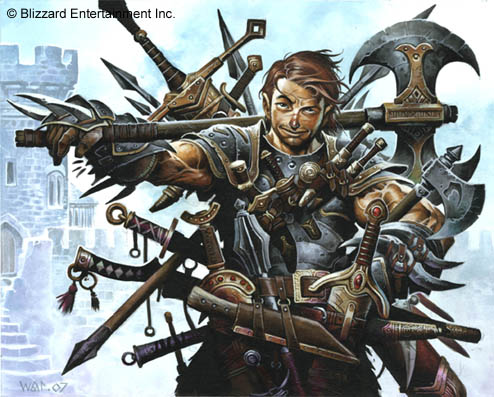
            Choose which tools your class will wage war with. Remember that each piece of armour and each weapon have its own advantages and disadvantages, and must consider this when choosing your classes’ role. Heavier armours are generally used by more melee orientated classes, whereas the lighter armours are favoured by Toolboxes, as to avoid skill penalties. Feel free to restrict your character to one specific item or set of items rather than a whole category.
            As standard, only Paladin can wear Super-Heavy armour at 1st level without the aid of feats. In addition, it is rare indeed that a class has access to the whole plethora of Martial weapons, and rarer still have proficiency with a Superior weapon as standard.


Bonuses to Defence
            A slight increase to your classes’ defences is needed, mainly to add 1st level flavour, and in part to set them aside from the rest. Choose either a +2 bonus to one of Fortitude, Reflex or Will, or a +1 bonus to two of them. This puts a defensive emphasis on your character, and adds some definition to the class. It only makes sense that a Rogue is good at dodging, or a Psion has a might will.
            On rare occasions, you might feel that your class has such a broad spectrum, than neither option really fits. In such circumstances, grant your class a +1 bonus to all three of these defences to reflect this. This is not a common tool, and usually it is granted to compensate for some initial weakness in the class.


Hit Points
            The Hit Points you grant your class define much of its playing style, and indeed, defines its role numerically. At the lowest end of the spectrum, many cloth-based classes will gain d4 Hit Points per level, as befitting their frail nature. At the other end of the spectrum, d8 Hit Point growth belongs to the heavier classes, such as Tanks or frontline Damage Dealers. The d10 growth belongs almost exclusively with Barbarian, keep this in mind if you decide to grant a class such a large pool, and be ready to make a sacrifice somewhere else amongst their design.
            Of course, these definitions are based on the Providence RPG design, for D&D and Pathfinder, the dice standard is different, but the idea is the same.


Healing Surges
            Choose between six and twelve healing surges to grant your class. This is a measure of how much they can be healed, so a back line class will not need as many as a front line class. Be careful with the number of surges you grant, as too many surges means that there is no threat of ever running low on Hit Points.


Skill Points
            Decide on how many skill points you want to award your class with. Many classes do not have a great number of skill points, as it is the realm of the Toolbox. To aid your decision, think about how you want your class to perform in terms of skill;
If the class is likely to have a high INT score without being a Toolbox, set the bar low, a 2 + INT modifier. This way, their skills grow at an accelerated level without any particular effort.
If this class is a Toolbox with a high INT score or a different role that leans toward a Toolbox mindset, set the growth rate at 4 + INT modifier, allowing for rapid skill growth.
If the class is a Toolbox, but with only an optional use of the INT score, use 6 + INT modifier for skill growth. This way, skills will grow at an accelerated rate without the player input. If the player does decide to give attention to INT, then their skills will rise at an unparalleled rate, so long as this decision is at a detriment to another aspect of their class.
 If your class does not emphasise skills or INT at all, then leave the skill growth at 2. This will provide enough points to add some utility and flavour, but not enough to distract it from its real role.


Skills
            Decide on a skill list for your class. The number of skills and which skills to use are heavily dependant on the ability scores you chose to focus around. Pick skills that both make sense for your classes’ image, and are aided by the ability scores chosen. A heavy, frontline fighter will often be adept and jumping and climbing, whereas a light, sneaky character will need skills to balance and pick locks. Remember, a class cannot possess the Fly skill unless they have an ability in their eventual growth that allows them to fly.


Attack Growth
            Determine how quickly your class gains new attacks per standard action. A growth of 6 is for main damage dealers and other melee-orientated classes. A growth of 7 is for Toolboxes, and other roles that have viable melee potential, but not as adept as others. A growth of 8 is for spellcasters, and other such archetypes that do not wade forward into the fray to gain much of combat experience. The attack growth of 5 is exclusive to Fighter.


Class Features and Growth
            The meat of class creation; decide what your class will do, and how it will go about doing it. This is where many of the inspirational ideas you’ve had accumulates into class growth, but there are still a few things to consider.

            Find one theme or ability, and focus around that. Turn the key ability into a platform from which you can write other powers.

            Offer a choice of ‘build’ at 1st level. A broad-ish selection of minor powers suffices, enough to grant a feeling of flavour and individuality but not enough to overpower the class. If possible, make it tie in with your classes’ primary ability, or make the choice enhance the existing power.

            Keep the 1st level bonuses as concise as you can. 1st level characters are above average persons, they are not heroes just yet, make them earn their growth by limiting what they have access to at 1st level.

            Avoid dead levels in character growth. Customisation is key, make sure that from levels 1-20 the class has something new to offer.

            Choose which kind of growth to employ. The easiest strategy is to grant set powers or abilities at every even level, and allow feats to take the odd levels. This can be a very lengthy process to write the full extent of powers and abilities, but it is often worthwhile. Another strategy is to do a paralleled growth style, namely at 2nd level and every 4th level thereafter, and at 4th level and every 4th level after. This allows for two different bonuses and themes to grow in the same class. A third, and less desirable, option is fixed growth. Write every power and ability at even level, and offer the player no choice as to how they develop. Although this is restricting, it can be very balanced, as there is little to no room for finding that golden, game-breaking combination you hadn’t considered. This style usually grants specific, awesome powers that outclasses any choice, and is often employed for spellcasting classes, who already have a great deal of customisation via their spells.

            Does your class employ magic? If so, restrict the amount of customisation your class has to a few feats or select powers, as the sheer scope of the spell lists alone far and away surpasses the options for non-spellcasters.

            Does your class have a great power that needs restricting, like a Barbarian’s Rage or a Bard’s Song? If your classes’ effects are too powerful or open to abuse, limit the number of times per day they can be used. An easy option is to tie the duration to a specific skill. Barbarians, for example, can Rage a number of rounds per day equal to their Endurance skill.

            Does your class have a resource? Think of ways your resource can be used in the most creative manner possible. How is this resource managed? How is it spent, and what happens when it is? How does your resource recover?

            How complicated is your class? Be careful of straying too far outside RPG conventions or introducing too many class-specific terms. If your class is fantastically complicated, be very careful it doesn’t become convoluted in execution at the risk of losing potential players. If others have trouble understanding it, layout is your best friend. Use smaller sentences, use subtitles and make paragraphs more obvious. Anticipate the questions asked of you.

            Reward players for taking your class to 20th level and beyond. Prepare a fantastic power that is so good, it entices players to go the distance with yours. Once per day powers are a good choice, potentially involving something like a perfect success skill check, an irresistible spell, or an instant-death attack.

And so
            I sincerely hope that you find the inspiration to write your own class, because I can promise you there’s nothing more exhilarating than seeing another person enjoying the workings of your class.
            Don’t be afraid about getting it wrong; start underpowered and work upwards to an appropriate strength level. You’ll have to test your class into destruction before you get it right. Have a calculator with you, and assume all ability scores you class works with will be at 18 at 1st level.
            Have fun, and I hope to see some works of art soon!

Thursday, 2 February 2012

A Quick Update

Sorry for the lack of updates, it's been a busy few weeks! The weekly story is coming along nicely, and is set to be written as I finalise a few things. The equivalent of Wilder is still being designed, and is being written under the name of Pariah. I'm still deciding on how to use their emotions; passive effects based on party acts, abilities based on party members, or perhaps chosen effects with a random outcome! I'll get working on a proper update soon, until then, hang tough!

Tuesday, 17 January 2012

FAQ: Power Sources


What are Power Sources?

            Each class draws on something, whether it is the strength of a deity, ambient magic or a well of experience. This is called their Power Source.


What does a Power Source do?

            Immediately? Nothing. Mechanics – wise, Power Sources come much later into character growth, usually affecting the choices around which Archetype and which Epic Destiny the character can choose.
            Thematically speaking, each Power Source gives a flavour to a group of classes by conforming to a common set of themes.


What are the Power Sources?

Arcane

            Arcane characters are unanimously magical. Their expertise lies in twisting the ambient magic of the world to fit their own ends. Classes that are Arcane include Wizards, Sorcerers, Bards and Artificers.
            Arcane characters are generally very good at a distance, and between the classes, they can provide, support, damage, healing and utility in equal measure. Arcane classes are also uniquely flexible; many of them have access to the Arcane spell list, and at least one method of manipulating their spells to suit their needs.
            The Arcane Power Source lacks any viable melee options, however, and have no ability to Tank.


Divine
            Divine characters subscribe to the will of the Gods. They are devoted to one or several causes, and wield their deific gifts to further the ends of their patron. Classes that are Divine include Cleric, Inquisitor and Paladin.
            All Divine characters embrace the theme of defence over offence. They incorporate some of the best healing capabilities with defensive unity that can be used up close and personal or at a distance. Equally, a single Divine class is a force to be reckoned with, as their God-given powers grant them many tools to fight one or more enemies alone.
            Despite their defensive flexibility and depth of the Divine spell list, Divine classes lack any dedicated ability to fight at range, even though some Inquisitors and Clerics can attempt to alleviate this problem.


Martial
            Martial characters draw on wells of experience and intense training. They do not have supernatural powers, but rely on themselves over everything else to see the day through. Classes that are Martial include Fighter, Ranger, Rogue and Warlord.
            Martial characters are easily the most well rounded of the Power Sources, combining offence, defence and utility in equal measure. They are generally have more Hit Points than other classes, and any one class can be tooled to cope with any situation.
            Martial characters also have the greatest flaw amongst the Power Sources; there is no spell list for Martial characters. This means that Martial characters cannot overcome more exotic foes without the aid of magical characters, and more eclectic powers of the other Power Sources remain far out of their reach.

Primal
            Primal characters worship Greater Spirits in the same manner that Divine characters worship Gods. They are not bound to the service of one patron, instead revelling in the entirety of the natural world. Classes that are Primal include Barbarian, Druid, Elementalist and Totemic.
            Primal classes contain many extremes in their lineup. Many of them, Barbarian in particular, can only do one role at a time, whereas many other classes can potentially fill several roles. Nevertheless, all Primal classes are powerful, and contain aspects and combinations of powers that are not present in other Power Sources.


Psionic
            Psionic characters use the mind to wield the power of the immortal soul. They are uniquely powerful, and make use of exotic power mechanics. Classes that are Psionic include Chronarch, Monk and Psion.
            Psionic classes follow a theme of spending. Each one has a resource, whether it be Seconds, Ki or Power Points, which they use to augment their spells and powers. As a result, Psionic characters can manipulate their functions to perform exceedingly well in and out of combat.
            Despite all of their power, Psionic classes are limited to how far they can push themselves. When their Psionic Resources run dry, they must use more mundane methods of combat, which in turn is generally less effective than other classes.


Shadow
            Shadow characters have a relationship with darkness as an entity. Although they have a potentially evil source, a Shadow character is no less inclined to do good or evil. Classes that belong to the Shadow Source include Doomguard, Faustian and Shadowdancer.
            Shadow classes run under the theme of the pact. Every one of them includes an aspect of their soul that has been given away, or turned into something more malefic. Their class powers allow them to cover the whole spectrum of party needs.
            Although a Faustian can aid a party, this Power Source has no dedicated healers amongst its ranks. In addition, many of the more exotic powers at the Shadow Source’s disposal require precise conditions, making them situational and inflexible.

[Kudos to a Google for th epictures. You all know the drill by now.]

Sunday, 15 January 2012

Psionic Classes: Monk


Monk

            “That was impressive! Try and hit me again – with any luck, I’ll have as much to teach you as you are teaching me.”

            In the cities, mountains, and the distant corners of the multiverse lie monasteries dedicated to self control, discipline, and the bettering of the mortal condition. Since the breaking of the Crystal Gate and an increased frequency of mortals manifesting Psionic powers, these monasteries have become more popular with those who have the Psionic talent. Students at these monasteries learn to fight without weapons or armour, and wield the power of their mind and soul as a lethal weapon.
            Different monasteries often follow a different ethos; monasteries following the way of the Godhand, for example, reside in the Astral Sea, and teach their students in the ever-constant light and guidance of the gods. The way of the Mountainheart promotes the body as a tool that needs to be crafted into perfection, so that only the perfect mind can control it. The way of the Gutterrunner is less esoteric than other ways, and promotes the belief that doing the best for all mortals is not to train away from busy areas, but to be a part of the bustle of the city, and learn the arts through the lessons civilisation has to teach. Twilight Disciples learn lessons from Shadowdancers and the Assassin temples, dictating that the path to mental perfection lies in the stillness and precision of perfect timing and execution.
            All Monks are eventually convinced to leave the monastery to pursue experience in the wider world. Many return, telling of wonders and bringing their allies with them as guests. Many do not, content to keep their adventuring life apart from their monastery. Some become so detached that they develop their own unique fighting style, and when their days are done, they will find an ideal spot to found a monastery of their own.


Class Traits
¨      Role: Monks are expert melee combatants. Their different teachings offer them different combat abilities.
¨      Alignment: Varies
¨      Power Source: Psionic.
¨      Key Abilities: Strength, Dexterity, Constitution, Wisdom.
¨      Armour Proficiencies: Light Armour
¨      Weapon Proficiencies: Monk Unarmed Strike, Sickle, Quarterstaff, Sling, Crossbow.
¨      Bonuses to Defence: +2 Fortitude
¨      Hit Points at 1st level: 2d8+ Constitution score
¨      Hit Points per level gained: d8+ Constitution modifier
¨      Healing Surges per day: 8+ Constitution Modifier
¨      Skill Points at 1st level: (4 + Intelligence Modifier) x4
¨      Skill Points per level: 4 + Intelligence Modifier
¨      Attack Growth: 6
¨      Class Skills: Acrobatics, Climb, Diplomacy, Escape Artist, Endurance, Heal, Intimidate, Jump, Perception, Sense Motive, Stealth, Swim.


Class Features

      Psionic Soul (1st level)
You can manifest Psionic power. Monks use Ki points to fuel their Martial Arts; you do not manipulate the power of your mind to effect the world, rather, you use your mind to direct the strength of your immortal soul. Your maximum Ki pool is equal to your level + your WIS modifier x3. You must take an extended rest to replenish your Ki pool.


     Monk Unarmed Strike (1st level)
Monks are adept at attacking with their fists. A Monk's unarmed strike has a +3 proficiency and deals 1d6 damage. Each Monk has a martial focus, where it be a holy artefact or personal item. This focus augments a Monk's Unarmed attacks. When a Monk has a magical focus equipped, they gain the focus’ enchantment bonus to their attack and damage rolls. In addition, any non-physical attack granted by a Martial Art also benefits from the Implements’ enchantment bonus.


      Flurry of Blows (1st level)
As a full attack action, a Monk can perform an extra attack with their fists. At 7th and 14th level, you can perform an additional attack with a Flurry of Blows. This attack can only be used if you are bear handed, and are wearing cloth or no armour. Attacks made with a Flurry of Blows cannot be distributed amongst adjacent targets.


       Martial Arts (1st level)
At 1st level, choose two Martial arts to learn from the following list. At 2nd level and every even level thereafter, choose another Martial Art to learn. All Monks automatically know the Soul Charge and Spirit Push powers.

Advancing Flurry: Free action. 3 Ki. After you successfully hit a target with your Flurry of Blows, you can slide the target 1 square, and shift 1 square to remain adjacent to it.

Bear's Claw: Advanced action. 3 Ki. You make a Bull Rush attack. The target is pushed 3 squares instead of 1.

Cleansing Chakra: Minor action. 5 Ki. Make a saving throw to end an effect you can save against.

Crane's Wings: Move action. 5 Ki. You make a jump skill check with a +5 bonus. You count as running for the purpose for this skill check, and the maximum distance you jump is not limited by your maximum speed.

Cobra's Advance: Move Action. 1 Ki. You move your speed + 2.

Dragon Kick: Advanced action. 2 Ki. You charge, and can travel 2 additional squares for the charge action.

Dragon Tail Sweep: Advanced action. 3 Ki. You make your basic melee attack round against one creature, and that creature falls prone.

Empty the Well: Minor action. Your Ki pool drops to 0. You gain temporary hit points equal to 2x the amount of Ki you lost.

Follow the Needle: Move action. 1 Ki. You swap places with one willing adjacent ally, or one adjacent prone target.

Formless Strikes: Minor action. 1 Ki per turn. You enter the Formless Fist stance. Whilst in this stance, you use WIS to determine your Monk Unarmed Strike attack and damage rolls instead of your STR.

Furious Flurry: Reduces your maximum Ki by 7. Your Flurry of Blows gains an additional attack.

High Tide: Move action. 1 Ki. You shift 1 square and gain a bonus to all defences equal to 1/2 your WIS modifier (min 1) until the beginning of your next turn.

Improved Monk Unarmed Strike: Reduces your maximum Ki by 2. Your Monk Unarmed Strike increases its damage dice by 1 size.

Lesson of the Mountain: Reduces your maximum Ki by 1. Your maximum Hit Points rise by 5, and you gain another Healing Surge per day. You can take this Martial Art multiple times to a maximum of 3.

Lion's Roar: Standard action. 3 Ki. You make a basic melee attack against every target within your reach.

Monastic Defences: Reduces your maximum Ki by 2. You gain a +2 bonus to AC. This bonus rises by 1 per tier.

Monastic Diversity: Reduces maximum Ki by 3. You learn a Martial Art from one Monestary Training you do not have access to. The Ki cost for this Martial Art does not replace any that comes with the Martial Art you selected.

Monastic Evasion: Reduces maximum Ki by 2. Your Reflex rises by 2.

Monastic Mind: Reduces maximum Ki by 2. Your Will rises by 2.

Monastic Movement: Reduces maximum Ki by 4. You gain +1 movement. This Martial Art can be taken multiple times to a maximum of 5.

Open the Gate: Free action. 1 Ki per turn. You enter the Gate of Battle stance. Whilst active, you gain a bonus to attack and damage rolls equal to 1/2 your WIS modifier (min 1). This stance stacks on and can be used with other stances.

Purity of Body: Reduces maximum Ki by 3. You are immune to diseases, although you can still contract and spread them.

Quivering Palm: Full round action. 25 Ki. You make one basic melee attack against the target that inflicts no damage. The target suffers ongoing 20 damage. If the target makes a successful save to end the effect, the ongoing damage is reduced by 5 instead. If you miss the attack, the target suffers ongoing 12 damage. If the target makes a successful save to end the effect, the ongoing damage is reduced by 3 instead.

Ride the Storm: Immediate reaction. 5 Ki. When an enemy misses you with an attack, you can teleport a number of squares equal to 1/2 your WIS modifier (min 1). Any movement increasing effects also increase the distance you can teleport by the same number of squares.

Sea of Ki: Your maximum Ki rises by 5. You can take this Martial Art multiple times, to a maximum of 3.

Slow Fall: Reduces maximum Ki by 4. Whenever you would take falling damage, reduce the number of damage die by 2.

Soul Charge: Full round action. 0 Ki. You regain 1d4+ WIS modifier Ki points. This action provokes attacks of opportunity. You cannot exceed your maximum number of Ki points with this ability. Any Ki points generated with this ability dissipate at the end of the encounter.

Spirit Push: Advanced attack action. 3 Ki. You make a Wisdom vs Will Implement attack against each adjacent enemy. The target is pushed 1 square.

Tiger's Hunt: Move action. 1 Ki. You shift 2 squares.

Unarmed Adept: Reduces your maximum Ki pool by 5. Your Monk Unarmed Strike deals an additional 2 damage. This bonus rises by 1 per tier.

Versatile Flurry: Reduces your maximum Ki by 1. Your Flurry of Blows attack can target a different creature than your main attack.

Weapon Adept: Reduces your maximum Ki pool by 4. You gain a +2 bonus to attack rolls whilst wielding weapons. This bonus rises by 1 per tier.


Monastery Training (1st level)
Pick one of the following Monastery trainings. Once chosen, this cannot be changed. Each training adds a unique ability, an ability score based bonus to AC, an extra class skill, and a set of learnable techniques that is added to the full list above.

Godhand: Your power source also becomes Divine. You gain the Channel Divinity of your deity as a bonus feat, and any powers that use Ki have the Radiant keyword. You gain a bonus to AC equal to your WIS modifier. You add Knowledge (Religion) to your class skill list. You gain access to the following Martial Arts;

Detect Foe: Minor action. 1 Ki. You can sense targets with an alignment opposing yours with a range of 15 squares.

Regain Health: Move action. 12 Ki. You spend a healing surge, and regain Hit Points equal to your surge value + WIS modifier.

Manifest Divinity: Free action. 15 Ki. You regain the use of your Channel Divinity power, even if you have used it this encounter.

Disrupting Fist: Minor Action. 4 Ki. Your next melee attack round ignores insubstantiality and Resistances. The target is weakened until the end of their next turn.

Holy Soulshield: Minor Action. You can spend as much Ki as you want to activate this power. You gain Resist Physical, Necrotic and Shadow equal to twice the amount of Ki you spent until the end of your next turn.


Gutterrunner: Your power source also becomes Martial. You gain Weapon Finesse as a bonus feat, and your Monk Unarmed Strike counts as a finesse weapon for the purpose of that feat. You gain a bonus to AC equal to your INT modifier. You add Disable Device to your class skill list. You gain access to the following Martial Arts:

Handy: Reduces your maximum Ki pool by 1. You can draw, use or stow an item once per round as a free action.

Gutterjump: Move action. You can spend as much Ki as you want to activate this power. You make a Jump skill check. You gain a bonus to that skill check equal to 10 + the amount of Ki you spent. Your maximum jump distance is not limited by your maximum speed.

Street Smarts: Reduces your maximum Ki pool by 3. You gain a bonus to all Bluff, Diplomacy, Disable Device, Intimidate, Perception and Sense Motive checks equal to your INT modifier.

Kidney Punch: Reduces your maximum Ki pool by 6. Once per round, when you attack a target that grants combat advantage to you, you deal 1d6 extra damage. You can take this Martial Art multiple times to a maximum of three.

Suppress Impact: Immediate Reaction. You can spend as much Ki as you want to activate this power. Whenever you would suffer falling damage, you reduce the number of damage dice equal to the amount of Ki you spent.


Keeper of Halidom: Your power source also becomes Primal. You gain a bonus to attack and damage rolls equal to 1/2 your CON modifier. You gain a bonus to AC equal to ½ your WIS modifier. You add Knowledge (Nature) and Survival to your class skill list. You gain access to the following Martial Arts:

Root Step: Reduces your maximum Ki by 3. You can shift and run over difficult terrain.

Body to Soul: Reduces your maximum Ki by 5. You can spend Hit Points instead of Ki to power your Martial Arts.

Nature's Bounty: Immeditate Reaction. 2 Ki. When you damage a target with your Flurry of Blows, you gain temporary Hit Points equal to your 2x CON modifier.

Keeper's Wards: Reduces your maximum Ki by 3. All animals that can see or hear you are more friendly to you by one degree.  You gain a +5 bonus to Handle Animal checks.

Earth Sigil: Move action. 8 Ki. You gain a +5 bonus to saving throws against poison, stun, daze, weakening and domination effects. You gain damage resistance against all damage equal to your CON modifier. These bonuses last a number of rounds equal to your CON modifier.


 Hand of Chaos: Your power source also becomes Arcane. You gain a bonus to your maximum Ki pool equal to your STR modifier. You add Knowledge (Planes) and Spellcraft to your class skill list. You know all of the following Martial Arts:

Inferno: Advanced action. 7 Ki. You charge; your attack gains the Fire Keyword. Any enemy that hits you during the charge suffers Fire damage equal to your STR modifier. All of your attacks gain the benefit of your charge.

Quake: Advanced action. 7 Ki. Close Blast 3, STR vs Reflex. All targets in the Blast suffer 1d8 + STR modifier damage. This attack deals another 1d8 damage at 6th level, and every 6th level thereafter.

Windstorm: Advanced action. 7 Ki. Ranged 5, Area 5, STR vs Reflex. All creatures in the area that are pulled 1 square towards the centre of the area. Creatures at the centre or cannot move to the centre are knocked prone instead. The area lasts a number of rounds equal to your STR modifier (the effect ends at the end of your turn).

Deluge: Advanced action. 7 Ki. Ranged 10, STR vs Reflex. Three attacks. The target takes 1d4 + 1/2 STR modifier Cold damage.  At 4th level and every 4th level thereafter, this Martial Art gains another attack.


Mountainheart: Your power source also becomes Martial. Your Monk Unarmed Strike deals 1d8 damage and gains the Brutal 1 trait. You gain a bonus to AC equal to your CON modifier. You add Knowledge (Geography) to your class skill list. You gain access to the following Martial Arts:

 Sturdy Mountain: minor action. 1 Ki per turn. You enter the Sturdy Mountain stance. Whilst you remain in this stance, you are slowed and cannot shift. You cannot be pulled, pushed or slid whilst you remain in this stance, and you gain an additional bonus to AC equal to ½  your CON modifier.

Raging River: minor action. 1 Ki per turn. You enter the Raging River stance. Whilst you remain in this stance, your movement value is halved. If you move or shift into a square occupied by another creature, you push that creature into an adjacent square if it is within 1 size category above or below yours. You gain a bonus to your damage rolls equal to 1/2 your CON modifier.

 Sōkotsu: Full round action. 7 Ki. You perform a full attack action and use your Flurry of Blows. The target of this attack suffers ongoing damage equal to your CON modifier.

Senjuinrikio: Full round action. 7 Ki. You perform a full attack action and use your Flurry of Blows. The critical threat of this attack rises by 2.

Gōken: Reduces maximum Ki by 6. Your Monk Unarmed Strikes deal extra damage equal to 1/2 your CON modifier.


Twilight Disciple: Your power source also becomes Shadow. You gain proficiency with daggers and shortswords. You may use weapons with your Flurry of Blows. You gain a bonus to AC equal to your INT modifier. You gain access to the following Martial Arts:

Issekigan: Opportunity action. 5 Ki. When you are targeted by a melee or ranged weapon attack, you can make an attack roll and compare it to the attack roll of the triggering attack. If your roll matches or beats the triggering roll, the attack counts as missed.

Utsusemi: Move action. 3 Ki. You shift 1 square, and a duplicate of you remains in the square you left. This duplicate remains until the end of your next turn. The duplicate is an illusion, and has no heft nor does it cast a shadow. Enemies must  succeed a perception check against your Stealth check, or mistake the duplicate for you. If an enemy hits the duplicate with an attack, it dissipates.

Kurayami: Standard action. 4 Ki. Ranged 5, Wall 5. A 10 foot high wall of thick smoke provides total concealment for all creatures in the wall and those looking into the wall. The wall lasts a number of rounds equal to your INT modifier.

Hojo: Standard action. 3 Ki. Ranged 5, DEX vs Fortitude. The target is Slowed (save ends).

Jubaku: Standard action. 8 Ki. Ranged 5, DEX vs Fortitude. The target must reroll successful hits (save ends).

Yonin: Minor action. 1 Ki per turn. You enter the Exposed Ninjutsu stance. You Mark targets you hit with melee attacks, and gain a bonus to AC and reflex equal to 1/2 your INT modifier.

Innin: Minor action. 1Ki per turn. You enter the Camoflagued Ninjutsu stance. You gain a bonus to Stealth checks equal to 2x INT modifier. The critical threat of your melee attacks rise by 3 if you attack a target from a position of Stealth or concealment.

Chishi-sei: Reduces your maximum Ki pool by 2. Your melee weapon attacks gain the High Crit property.

Aisha: Increase your maximum Ki pool by your INT modifier.


Clear Soul: Your maximum Ki pool is equal to your level + WIS modifier x 5. You gain a bonus to AC equal to your CHR modifier. You add Fly and Use Magical Device to your class skill list. You gain access to the following Martial Arts:

Cloud Step: Minor action. 1 Ki per turn. You enter the Cloud Step Stance. You can walk on air as if it were solid ground. If the stance ends whilst you are airborne, you glide slowly down to the ground at a rate of 1 square per round.

Cloud Spring: Minor action. 6 Ki per hour. You enter the Cloud Spring Stance. You gain the ability of overland flight at a rate of 8mph.

Ki Blast: Standard action. You can spend as much Ki as you want to activate this power. You create a ranged attack, the range of the attack is equal to the number amount of Ki you spent.  All creatures in the line of the ranged attack suffer a CHR vs Reflex attack that deals 1d6 + CHR modifier damage. At 6th level and every 6th level thereafter, this damage rises by 1d6. If you consume 9 Ki or more to make the attack, it deals 1/2 damage if it misses.

Almighty Pull: Standard action. 5 Ki. Ranged 10, CHR vs Will. The target is pulled 5 squares.

Almighty Push: Standard action. 10 Ki. Burst 2, CHR vs Will. The target is pushed 5 squares.

Cataclysm: Full round action. 5 Ki per round. CHR vs Will. You enter the Empyrean Devastation stance, you must consume a full round action instead of a minor action to perpetuated the stance. Whilst in this stance, you gain an Aura 4. All creatures in the aura are attacked, and suffer 1d4 + CHR modifier damage. For every round after the first, the aura size increases by 2 and the damage increases by 1d4. For every round after the second, all creatures hit by this attack are lifted 5 feet into the air. Every hit after this lifts the target another 5 feet. A target descends 5 feet if they succeed a saving throw, or if they pass a Fly skill check (DC equals the number of Ki you have spent in total for Cataclysm. A creature cannot make a Fly skill check unless they have the skill). When you end the stance, any creatures in the air immediately fall unless they pass a Fly skill check.

[Kudos to Wizards of the Coast for the image]

Friday, 30 December 2011

Shadow Classes: Shadowdancer


Shadowdancer

            “If you thought you saw something in the corner of your eye, then I am ashamed for doing such a poor job.”

            The threats of the Shadowfell are varied, so much so that the regular methods of defence are sometimes rendered useless. How does one defend a small city against a numberless zombie horde?
            A grudging truth that the Doomguard brotherhoods will admit is that their numbers are not great enough to launch an all-out war against the undead of the Shadowfell. Sometimes, more subtle means are needed.
            A Shadowdancer is a being who has mastered the art of manipulating shadows to find the most advantageous position on the battlefield. Some rely solely on stealth, using the shadows as portals to assassinate a target and slip away. Others take a more direct approach, charging headlong into battle to cause mayhem amongst enemy lines, before teleporting away for another assault.
            Whatever their method, a Shadowdancer’s greatest asset is their Shadow. Their Shadow is alive, and, although silent, will often reflect their owner’s emotional state, or steal things of their own accord. With it, they can perform daring acts of acrobatics, turn a gentle caress into a gut-slashing stroke, and escape from impossible situations.
            Although there are others that can act quicker or run faster than them, a Shadowdancer’s manoeuvrability is unrivalled. It only takes one Shadowdancer to create a problem for single enemies or massed forces, and that problem will be abused maliciously by any Doomguard entering the fray.

Class Traits
¨      Role: Shadowdancers teleport around the battlefield, sending enemies into states of disarray. They are one of the most mobile classes, matched only by the Speedster Rogue.
¨      Alignment: Any
¨      Power Source: Shadow
¨      Key Abilities: Strength, Dexterity, Intelligence, Charisma
¨      Armour Proficiencies: Light Armour
¨      Weapon Proficiencies: Simple ranged, Dagger, Shortsword.
¨      Bonuses to Defence: +2 Reflex
¨      Hit Points at 1st level: 2d6+ Constitution score
¨      Hit Points per level gained: d6+ Constitution modifier
¨      Healing Surges per day: 7+ Constitution Modifier
¨      Skill Points at 1st level: (6 + Intelligence Modifier) x4
¨      Skill Points per level: 6 + Intelligence Modifier
¨      Attack Growth: 6
¨      Class Skills: Acrobatics, Bluff, Climb, Craft, Diplomacy, Disable Device, Disguise, Escape Artist, Intimidate, Jump, Knowledge (Dungeoneering), Knowledge (Planes), Linguistics, Perception, Perform, Profession, Sense Motive, Stealth, Swim, Thievery, Use Magic Device.


Class Features

Shadow of the Shadowfell (1st level)
Your Shadow is alive. It shares your space on the board, your defences, and has 1hp. Your Shadow cannot be targeted by single target enemy attacks. If you are attacked by an area, burst or blast attack, your Shadow is targeted by the attack as well. A missed attack never damages your Shadow. Your Shadow cannot exist in engulfing light where there is no shadow, such as a desert or an open courtyard at midday. Your Shadow counts as destroyed if you enter such light. If your Shadow is destroyed for whatever reason, you can reconstitute it by spending one minute in meditation.
If your Shadow is active, you access key abilities;
v     You can perform one minor action, such as a mid-combat observation skill check, or drawing or stowing an item, as a free action once per turn.
v     Your Shadow can lift 15lb of items, but can never use the items as weapons.
v     Once per turn, as part of an advanced attack or full attack action, your Shadow attacks one target you hit. The shadow deals 1d6 damage, and deals an additional 1d6 damage for every 5 levels of Shadowdancer you have.


Shadowdance (1st level)
You know how to Shadowdance. Whilst Shadowdancing, you gain a +1 bonus to speed per tier. As a move action whilst Shadowdancing, you may teleport up to half your speed so long as there is a shadow adjacent to you that is not your own. You can perpetuate your dance for as many rounds per day as your Acrobatics skill +4.


Schools of Darkness (1st level)
Choose one of the following schools. Once this choice has been made, it cannot be changed.

Banshee: You gain proficiency with the Longsword. Whilst you are Shadowdancing, enemies adjacent to you suffer a penalty to attack rolls equal to your CHR modifier. When you make an attack with your Shadow, you deal extra damage equal to your STR modifier.

Ghost: Your Shadow counts as an independent creature. It can glide your current speed, and has HP equal to your bloodied value, although missed attacks can now harm it. It heals to maximum health during a short rest. Your Shadow can now carry 30lb of equipment, and shares your skill list. It is an insubstantial creature, and gains an additional Resist Force equal to your CHR modifier. You must be adjacent to your Shadow or an enemy your Shadow is adjacent to in order to activate Shadow attacks. Your Shadow acts when you act, and cannot travel more than 20 squares away from you.

Poltergeist: When you fall from a height, you treat the fall as if it were 10 feet shorter than it actually is. Whilst Shadowdancing, your base movement is reduced by 3, but you may walk on air as if it were solid ground, and the maximum distance of your teleport remains unhindered. If you are stunned, dazed, or rendered unconscious whilst standing or fighting in midair, you plummet to the ground at a rate of 60 feet per round. If you regain your mental faculties before you hit the ground, you can spend a move action to resume Shadowdancing and stop falling. When you attack with your Shadow, you may re-roll the damage die for your Shadow attack only.

Raven: You gain the Raven Queen's Blessing Channel Divinity power. Whilst Shadowdancing, you can move over surfaces that would not otherwise support your weight, such as water, acid, or lava, and difficult terrain, but you cannot run over air. You do not suffer damage from running over these surfaces, but ending your turn over these surfaces means you fall into them. There is an exception; you can, if you make a double move action to Run twice, continue to run over a period of several turns without stopping, allowing you to cross things such as a body of water. When you make an attack with your Shadow against a bloodied target, you gain a bonus to your attack rolls equal to your INT modifier.

Spectre: The critical threat range of Daggers you wield increases by 1. While you Shadowdance, any teleport move you make turns you insubstantial until the end of your next turn. When you make a full attack action with your Shadow, your Shadow attack deals an additional INT modifier damage on a critical hit for every Shadow damage die you have.

Scorpion: You gain proficiency with the Rapier. You Mark targets you attack with your Shadow. Whilst Shadowdancing, you gain a bonus to AC equal to your CHR modifier. If a marked target damages you, you may teleport to a square adjacent to the target as a free action.

Spider: You gain Two Weapon fighting as a bonus feat. While you Shadowdance, you gain Spider Climb equal to your INT modifier. When you make a full attack action with your Shadow, you can slow the target you hit.

Wraith: You can hide in plain sight, so long as there is sufficient shadow near you, excluding your own. Whilst Shadowdancing, when you make a successful Stealth check to hide, you become invisible until you move. Like other forms of invisibility, this grants you a +10 bonus to Stealth checks to remain hidden. When you attack with your Shadow, the target of the attack suffers ongoing bleed damage equal to your STR modifier.

             
Dance Steps (2nd level)
At 2nd level, and every 2nd level thereafter, you may choose a Dance Step from the following list. Unless otherwise mentioned, you can only take a Step once.

Advancing Footsteps: Increase your Speed by 1 whilst Shadowdancing. You can take this Step multiple times to a maximum of 3 times.

Attunement: Increase the number of rounds you can perpetuate your Shadowdance by 2. You can take this Step without limit.

Breakneck Charge: Increase your speed whilst charging and Shadowdancing by your STR modifier.

Bend Distance: When you are hit with an attack that deals damage on a miss, you only take 1/4 damage instead of 1/2 damage.

Catch the Edge: When you throw a Dagger as part of a ranged attack, you can catch it with the hand you threw it.

Combat Dilettante: You gain a Combat Feat you meet the prerequisite for.

Dancer's Finesse: You gain the Weapon Finesse feat.

Dark Adept: Add another damage dice your Shadow attack.

Dark Destiny: Your Shadow attacks deal an additional 1 point of damage per damage die.

Dark Destroyer: Your Shadow damage die size rises by 1.

Dark Reaping: Your Shadow attacks gain the Brutal 1 trait.

Defending Shadow: If you are hit by a single target attack, and your Shadow is adjacent to you if you belong to the Ghost school, you can opt to have your Shadow become the target of the attack instead.

Evade the Light: You gain a +2 bonus to Reflex. You can take this step multiple times, each one adds +1 Reflex.

Fast Stealth: Whilst Shadowdancing, you suffer no penalty to Stealth checks to move at full speed.

Freedom of Form: As part of your teleport action, you can stand up or fall prone.

Graveyard Stand: If you recover from the dying status, you may stand up as a free action as soon as you regain consciousness.

Harrowing: If your Shadow is destroyed for whatever reason, you gain a +2 bonus to your attack and damage rolls until the end of your next turn.

Kill the Light: As a minor action whilst Shadowdancing, you can snuff out all minor sources of light in the room you currently stand in, but not magical light.

Lightwalker: The environmental requirements to activate your abilities are reversed; to summarise, you work at your best in bright light instead of pitch darkness.

Multidirectional Defence: Whilst Shadowdancing, you do not grant combat advantage to one pair that is flanking you.

Nighteyes: You gain Low-Light vision. If your race choice already has that, you gain Darkvision instead.

Retaliate!: You gain a bonus to your Initiative roll equal to your INT modifier if you are ambushed.

Rogue Relations: You gain a Rogue talent you qualify for from the Rogue Talent list.

Shadow Mending: As a free action, you can destroy your Shadow to spend a healing surge.

Shadow Stitching: Requires Shadow Mending. After you use Shadow Mending, you gain Regeneration equal to your STR modifier.

Single Edge Slaying: Whilst you wield a Light Blade in one hand and your other hand is free, the critical threat of the weapon rises by 1.

Single Edge Parry: As part of an advanced attack action, you gain a +2 bonus to AC while you wield a light blade in one hand and your other hand is free.

Steady Skills: When you spend a standard action to make a skill check, you may take 10 for the check, even if you would be distracted.

Trap Training: You gain the Trap Finding Feat from the Rogue feat list.

Twin Blade Attack: Whilst wielding two Daggers, you gain a +1 bonus to all melee damage rolls.

Twin Sword Dervish: Whilst wielding two Shortswords, you gain a +1 bonus to AC and opportunity attack rolls.

Underhanded Jump: When you teleport to leave a square adjacent to an enemy, enemies adjacent to the square you left suffers a penalty to their next attack roll equal to your INT modifier.

Vestige of Faith: You learn either Lolth's Strike, Olidammara's Jump, or Sehanine's Retrbution as a Channel Divinity power. You do not have to worship the God in question, but your alignment must be one step from that of the god's.

Wisp Dodge: Whilst Shadowdancing, the first single target ranged attack against you in the encounter, weapon or magical, suffers a penalty to hit equal to 2x DEX your modifier.


Advanced Steps
At 10th level, you add the following list to the steps you can learn.

Advanced Single Edge Slaying: Whilst you wield a Light Blade in one hand and your other hand is free, the critical threat of the weapon rises by 1.

Advanced Single Edge Parry: As part of an advanced attack action, you gain a +2 bonus to AC while you wield a light blade in one hand and your other hand is free.

Advanced Twin Blade Attack: Whilst wielding two Daggers, you gain a +1 bonus to all melee damage rolls.

Advanced Twin Sword Dervish: Whilst wielding two Shortswords, you gain a +1 bonus to AC and opportunity attack rolls.

Blood and Wit: You gain Skill Focus as a bonus feat. You may take this step multiple times, with no limit.

Break the Light: Requires Kill the Light. As a minor action whilst Shadowdancing, you can snuff out all minor sources of light in the room you currently stand in, including magical light.

Enduring Shade: Once per encounter, when your Shadow is destroyed by an attack, it survives with 1 hit point.

Fallingdown: Whilst Shadowdancing, you fall from great heights at a rate of 60ft per round, and you suffer no damage when you land.

Gloaming Cut: As an advanced attack action, you can inflict ongoing damage to the target equal to your INT modifier.

Lethal Jump: When you teleport to leave a square adjacent to an enemy, enemies adjacent to the square you left grant combat advantage until the beginning of their next turn.

Ranged Legerdemain: You can perform Thievery and Disable Device checks from 6 squares away. Your Shadow must be active for you to use this ability, and you cannot take 10 or 20 for these skill checks. Any object manipulated must be able to be carried by your Shadow.

Resist Blindness: If an effect Blinds you, you may make an immediate saving throw against the effect.

Ride the Twilight: You can destroy your Shadow to gain a +20 bonus on your next Acrobatics or Jump check, and your jump distance is not limited by your speed.

Shadow Image: As a standard action, you can destroy your Shadow to create false images of yourself. The number of false images is equal to the number of Shadow damage die you have. Your images move in your turn, and may move as you are able to. The images have your defences -5, but disappear if struck. They cannot attack. The images are only visual effects. They make no sound or offer no smell, and leave no traces. Enemies suffer a -5 penalty to Perception checks for every image you have active for attempts to spot you.

Slaughter: Once per day as a full attack action whilst Shadowdancing, you can teleport, if able, to an enemy within teleport range and make one of your attacks per round against it. You may keep teleporting and attacking with this action, so long as there is at least one enemy remaining and you have unused attacks per round.

Trick the Trap: If you trigger a single target trap, you can redirect the attack to your shadow before the attack is rolled.

Voracious Edge: If you score a critical hit with a melee attack, you can use your Shadow attacks on the target of the critical hit, even if you didn't make an advanced attack action or a full attack action.


At 20th level, you may choose one of these three steps to learn instead of one from the previous lists. You can only ever learn one of these 20th level steps.

Perfect Darkness: As a standard action, you can extinguish all light from a room you currently occupy, even magical light. If something is aflame, such as an Efreet or a burning item, the subject still burns, but emits no light. Whilst Shadowdancing, any target you strike in total darkness becomes blinded and rattled (save ends).

Perfect Janus: Your Shadow cannot be destroyed by bright light. It now takes one full round action to reactivate your shadow instead of one minute of meditation. The amount of weight your shadow can carry rises by 5lb, and the damage die size of your shadow attacks rises by 1. When you score a critical hit, the maximum damage is also applied to your Shadow attacks.

Perfect Shadowjump: Whilst Shadowdancing, you can teleport up to your original movement speed.   You do not have to see where you want to teleport to in order to make the move so long as you have seen it before, however, if you try and the space is occupied, the move fails, but the action is still consumed. If you grab a target, ally or enemy, while you teleport that target teleports with you.

[Kudos to mineworker.deviantart.com for the picture]